
Understanding and Supporting Youth Mental Health: The Pressure Is Real
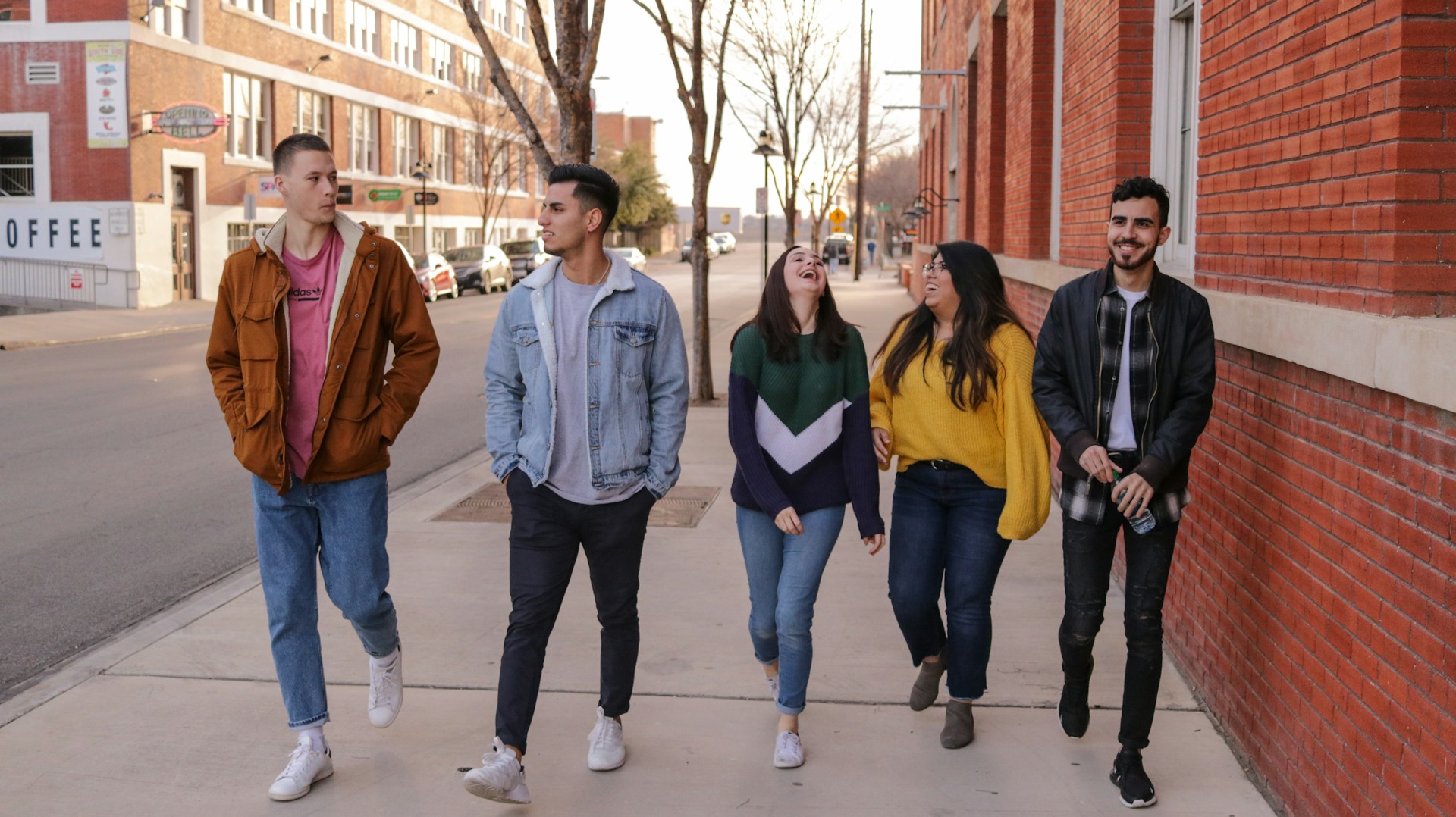
Youth mental health continues to be one of the most pressing public health concerns of our time. Rates of anxiety, depression, and loneliness among young people have been climbing for years, and most of the adults in their lives are aware that something significant is happening, even when they’re not sure what to do about it.
The causes are multiple and connected. Young people are absorbing powerful messages about who they’re supposed to be. They’re facing a social, economic and climate-related landscapes that feel genuinely harder to navigate than the ones previous generations inherited. And they’re spending more of their social lives in digital environments that, used in certain ways, appear to deepen rather than relieve feelings of isolation and self-doubt.
None of this is inevitable. But responding to it well requires understanding it clearly.
The Messages Young People Are Absorbing
Long before young people begin thinking consciously about personal identity, they are already absorbing powerful messages about who they’re supposed to be. These messages come from families, peers, media, and the broader culture, and they tend to be remarkably consistent and remarkably limiting.
Girls learn, often without anyone saying it directly, that their most important attributes are how they look, how agreeable they are, and how well they care for the people around them. Displays of intelligence, assertiveness, or strong opinion are often discouraged, subtly, but unmistakably. Boys get a parallel but equally constraining set of messages: Emotional expression is a form of weakness, personal value comes from being productive and looking good, and vulnerability puts you in jeopardy with others.
Messages like these shape how young people see themselves at precisely the stage of development when self-concept is most consequential. Girls who internalize that their worth is primarily in the eyes of other people will face different struggles in adulthood than boys who were never given permission to name or process their feelings, but both will definitely struggle, because both have been handed a diminished version of themselves to build a life on.
The adults in young people’s lives have more influence over these messages than they might realize, not just in what they say explicitly, but in what they model, what they reward, and what they allow to go unchallenged.
Growing Up in a World That Feels Harder to Navigate
Today’s young people are coming of age at a moment when the traditional markers of adult success — stable employment, financial security, home ownership — feel genuinely out of reach for many of them. They know this. They hear the same doom-based messaging everyone else sees, and many have watched their own parents navigate the same pressures.
What makes this particularly difficult is a developmental reality that doesn’t get enough attention. When adults face serious setbacks, they can draw on a history of having gotten through hard things before. They know, at least implicitly, that a life isn’t determined by any single outcome but by the sum of many choices made across many years. Young people don’t have that reservoir yet. When things go wrong, or when the future looks daunting, they have very little evidence to draw on that they’ll be able to handle what’s coming. That gap in experience is real, and it matters.
It likely also contributes to a striking pattern that researchers have documented among the smartphone generation. An important study by psychologists Jean Twenge and Heejung Park, published in the journal “Child Development” and drawing on survey data from 8.3 million teenagers collected between 1976 and 2016, found that today’s young people are engaging in the risk-taking behaviors of adolescence significantly less than previous generations did. Among 12th graders, the proportion with a driver’s license fell from 85% in 1994 to 73% in 2014. Those who went on dates dropped from 83% to 58%. Those who had tried alcohol fell from 81% to 66%. Those working for pay declined from 72% to 56%. Going out without parents, and sexual activity, also dropped substantially. Twenge expanded on these findings in her 2017 book “iGen”, which made the case that the smartphone generation is growing up more slowly across nearly every dimension of adolescent development, and paying a real psychological cost for it.
Some of these trends are straightforwardly positive. Fewer teenage pregnancies and drunk driving accidents are good things. But the broader pattern raises a concern worth sitting with. The experiences that teenagers have traditionally used to build confidence, resilience, and a working knowledge of their own capabilities, like, trying new things, getting them wrong, recovering, and trying again, are happening less. And the smartphone, which has largely filled that space, isn’t providing a meaningful substitute.
Technology, Loneliness, and the Comparison Trap
In November 2024, New York Times technology columnist Brian X. Chen published a piece called “How Tech Created a Recipe for Loneliness,” in which he reviewed the research on technology and social isolation and identified three specific patterns that consistently showed up in the data.
The first is social comparison. On platforms like Instagram and Tik Tok, people tend to post the best and most exciting aspects of their lives, leaving viewers naturally measuring themselves against highlight reels that were never meant to represent reality. For young people already uncertain about their own adequacy, that kind of repeated comparison can be genuinely corrosive.
The second is over-reliance on text messaging. Human beings are wired for face-to-face contact. Facial expressions, eye contact, and the tone of someone’s voice aren’t just pleasant additions to communication; they’re the primary signals through which we learn to read other people, regulate our own emotional responses, and build the neural wiring that allows us to show up in relationships. When most social interaction happens through screens, that development gets shortchanged. It becomes harder, over time, to read the room, to tolerate ambiguity in relationships, and to trust that you’re genuinely connected to another person.
The third is binge-watching and passive screen consumption. Time spent streaming content is time not spent moving, going outside, or engaging in the kind of direct, in-person activity that research consistently links to better mental health outcomes. Social media algorithms are specifically designed to keep people watching, which makes this harder to resist than it might appear.
Chen’s conclusion, consistent with the broader body of research he reviewed, was careful: technology doesn’t automatically cause loneliness, and plenty of socially connected people use a great deal of it. But there is a strong correlation between certain patterns of tech use and feelings of isolation, and young people, who are doing much of their socializing through these platforms during the years when social skills are being formed, are particularly exposed to these effects.
The Particular Challenge of Life Transitions
All of these pressures come into especially sharp focus during periods of significant transition, and few transitions are as demanding as the one many young people face in the fall: leaving home for the first time and beginning post-secondary education.
Moving from high school to university requires young people to simultaneously manage a remarkable number of new demands. They’re learning to live independently or alongside people they don’t know well. They’re developing study habits that high school may not have required. They’re figuring out how to budget, how to cook, how to manage their own time without the structure that home and school provided. And they’re doing all of this while also navigating new social contexts, making decisions about who they want to spend time with, balancing friendships with academic demands, and holding their own in situations where the social stakes feel very high.
What often makes this harder is that young people facing these transitions tend to interpret the difficulty as evidence that they’re not up to the challenge. Adults, drawing on years of experience with their own transitions, understand that difficulty is usually a sign that something matters, not a sign that you’re failing. Young people, without that context, often reach a different and more painful conclusion.
This is worth keeping in mind for the adults who are supporting them through these years. The goal isn’t to smooth every obstacle out of the way. It’s to help young people develop the experience of getting through difficult things, so they can gradually build the kind of evidence base that will allow them to say to themselves, with some confidence, “I’ve handled tough things before. I can handle this too.”
Adults Can Improve Youth Mental Health
Understanding what young people are up against is genuinely useful, but it’s most useful when it leads somewhere practical. A few things tend to make a real difference.
Pay attention to the messages you’re sending, and not just the ones you intend. Young people absorb what the adults around them model, reward, and overlook, often more than what they’re told directly.
Create space for real conversation, which usually means being present without an agenda. Young people are often more willing to talk about difficult things when they’re not being formally asked about difficult things.
Encourage in-person connection and activity, even when a screen-based alternative is easier. The social skills that matter most are built through practice, and practice requires showing up in person — without constant distractions.
Take their worries about the future seriously without amplifying them. Acknowledging that something is genuinely hard, while also conveying confidence that they’re capable of handling it, is one of the most useful things an adult can offer.
And when a young person’s anxiety, low mood, or withdrawal is persistent enough to affect their functioning at school, at home, or with friends, consider that professional support might help. Therapy, particularly evidence-based approaches like CBT and DBT, gives young people concrete skills for managing the pressures they’re facing, in the context of a relationship with someone who is focused entirely on helping them.
The Bottom Line
Young people today are navigating real pressures, and the adults in their lives are in a better position to help when they understand what those pressures actually are. The messages young people absorb about who they’re supposed to be, the gap between what they see ahead of them and what they feel equipped to handle, and the particular ways that technology shapes their social development are all worth taking seriously.
Young people are resilient, and the adults around them matter more than they might think. What young people need most isn’t protection from difficulty, but the experience of moving through it, with people who believe in them, standing beside them.
At Shift Cognitive Therapy, we work with adolescents, young adults, and the families who support them. If you’re concerned about a young person in your life, we’re glad to talk. Call us at 905-849-1288 for a brief, no-cost consultation. First appointments are usually available within one to two weeks, and most extended health benefits cover treatment.